

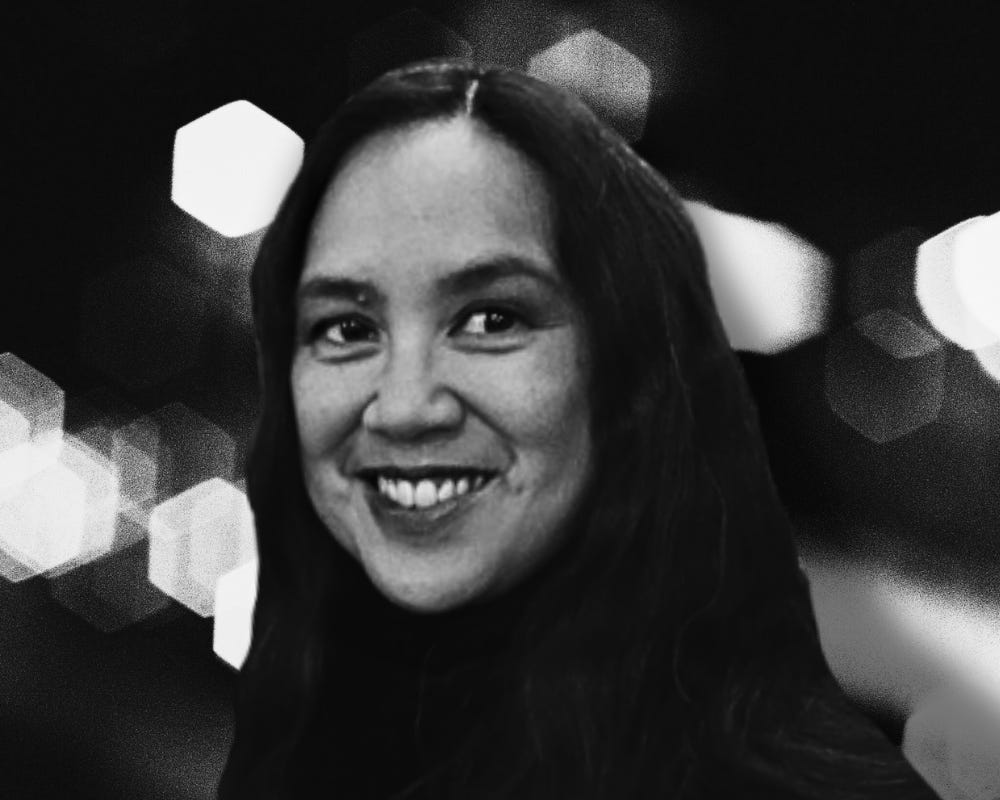
“Maximina Juson is a crucial voice and visionary filmmaker who is asking the questions we must address amid today’s polarized climate. Her dynamism, her intelligence and her gifts for communication are not simply individual virtues, they’re assets in an ongoing effort to retain and strengthen democracy.”
— Jelani Cobb
Dean, Columbia Journalism School
Presidential Elections: Architecture and Reform.
Award-winning filmmaker Maximina Juson uses her nationally broadcast PBS/Independent Lens documentary, One Person, One Vote?, as a starting point to examine how the design of presidential elections influences political behavior and civic life.
The Electoral College is an example of how the rules of a system can shape the incentives of everyone operating within it, from candidates and parties to voters themselves.
Film Screening
“Every American should see this movie.”
Michael Kosta, Host, The Daily Show
One Person, One Vote? is an entertaining, illuminating, and nonpartisan film unveiling the complexities of the Electoral College, the uniquely American and often misunderstood constitutional mechanism for electing a president.
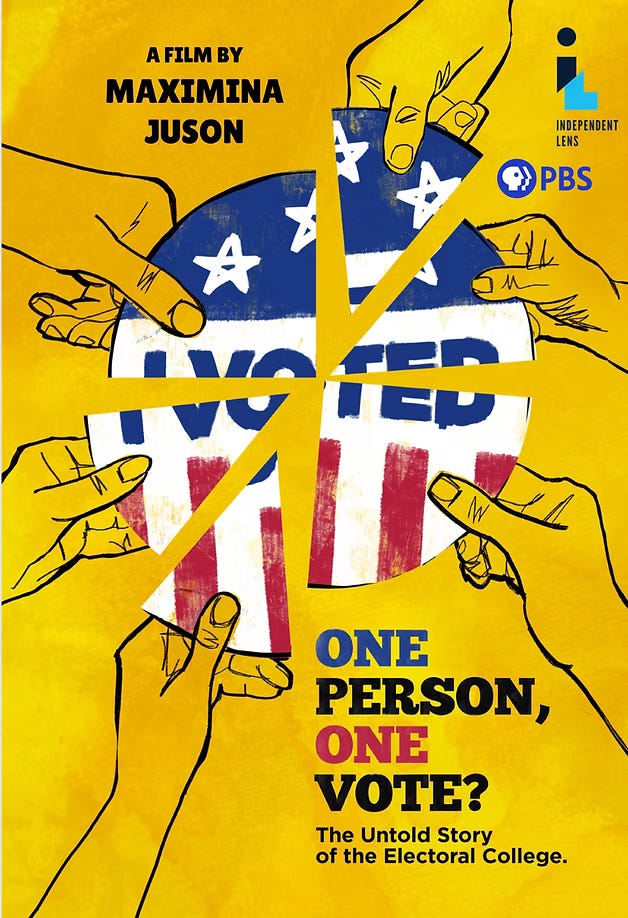
Most Americans find the Electoral College confusing and have never met a presidential elector. The film follows four from Colorado: a Republican, a Democrat, a Green Party elector, and a bona fide elector for Kanye West.
One Person, One Vote? puts a human face on the Electoral College, exploring its origins, how it works, and contemporary reform efforts such as the National Popular Vote Interstate Compact. The film is nonpartisan and interwoven with historical vignettes featuring leading scholars who examine the Electoral College’s roots at the 1787 Constitutional Convention, its origins in slavery, and its current-day impact on American politics and society.
Keynote Presentation
The Who Designs Democracy? keynote examines how the current electoral structure shapes presidential campaign strategy and influences our broader civic life.
It also explores the National Popular Vote Interstate Compact as a contemporary case study in democratic redesign: an agreement among participating states to award their electoral votes to the national popular vote winner once states totaling 270 electoral votes have joined the compact.
The screening and keynote asks:
How does electoral design shape political incentives?
What behaviors do institutional structures reward or discourage?
How does electoral complexity affect democratic legitimacy and public trust?
When does institutional redesign strengthen democracy and when does it destabilize it?
F.A.C.T.S.
Media Literacy for the Disinformation Age
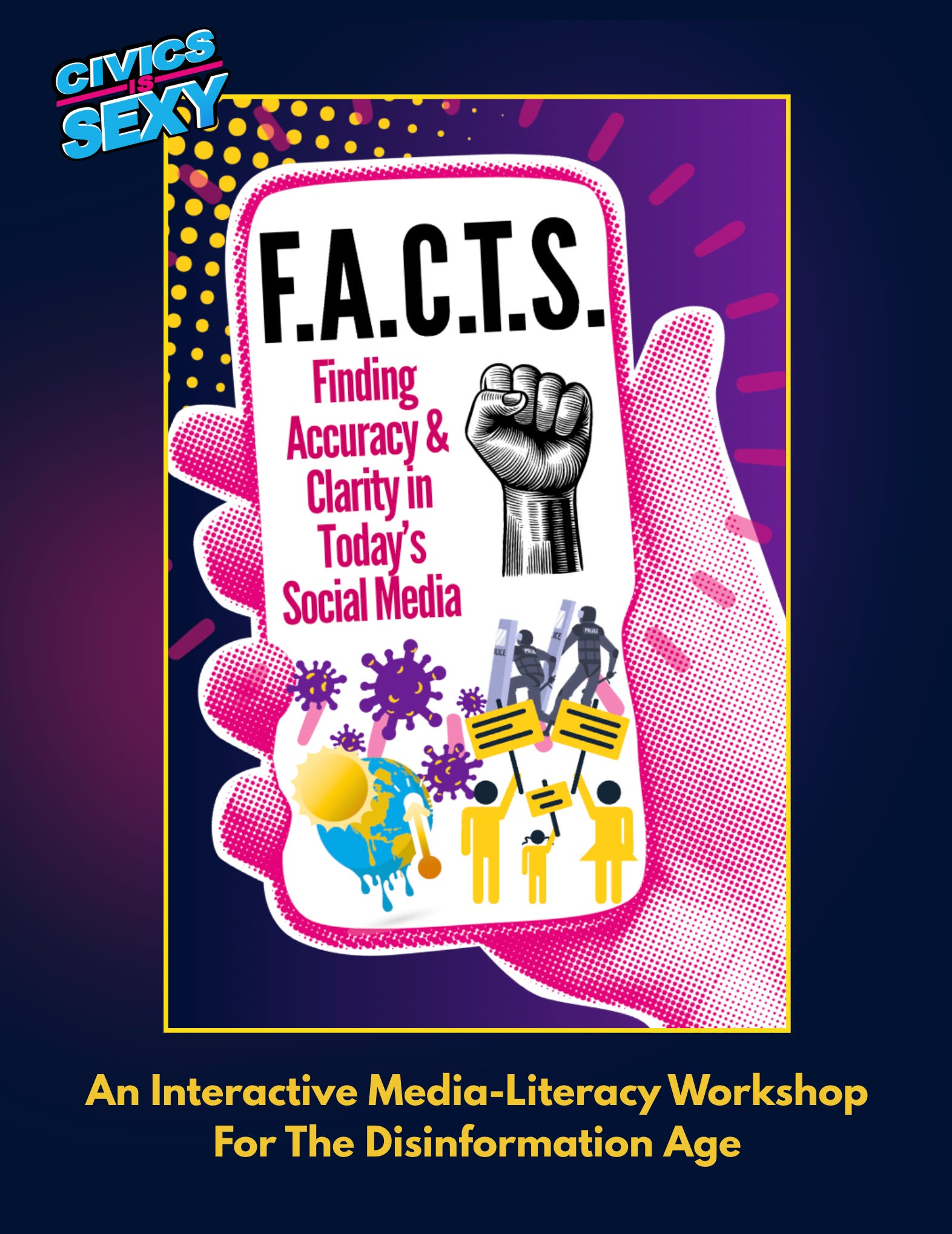
In addition to keynote and screening engagements, Juson offers F.A.C.T.S. (Finding Accuracy & Clarity in Today’s Social Media), developed through Civics Is Sexy.
F.A.C.T.S. equips participants with practical tools to identify misinformation, recognize bias, and navigate social media with greater clarity.
A compelling gamified experience, F.A.C.T.S. examines how emotional amplification and algorithmic incentives distort public understanding of democratic systems.
Through guided discussion, real-world examples, and audience participation, F.A.C.T.S. explores how attention is currency and how outrage, fear, and identity are often leveraged to drive engagement on social media. Rather than telling people what to think, the program focuses on how to think, i.e., how to vet information and temper emotional reaction.
Participants explore:
• Emotional Capitalism — how attention is monetized, and outrage becomes currency
• Crowd Psychology — how group dynamics influence perception
• Disinformation Dynamics — how distortion spreads without overt falsehoods
• Narrative Framing — how language shapes institutional legitimacy
Rather than focusing on partisan content, F.A.C.T.S. equips audiences with analytical tools to evaluate how democratic conversations are constructed and manipulated.
This module can be delivered as:
• A post-screening activation
• A seminar add-on
• An executive roundtable briefing
• A standalone institutional session
“An important educational tool for classrooms. A great way to capture students’ attention and lead rich discussions.”
— Cat Fish
Managing Director
Civic Nation
Who This Engagement Is For
This screening and keynote engagement are particularly well-suited for:
Universities and colleges seeking programming on democracy, constitutional design, media literacy, and civic engagement
Law schools and public policy programs examining institutional design and democratic reform
Journalism and media studies departments exploring the relationship between political systems, narrative framing, and public understanding
Civic organizations and foundations focused on democratic participation and structural reform
Conferences and leadership forums looking for a nonpartisan, systems-level exploration of how democratic institutions function and evolve
Grassroots organizations and faith communities seeking accessible, nonpartisan civic education that helps people better understand democratic institutions, civic participation, and their role within them
Each engagement is tailored to the audience and institutional context.
Engagement Formats
Available formats include:
• Film Screening + Keynote
• Graduate-Level Lecture + Faculty Dialogue
• Conference Plenary
• Executive Roundtable
• Keynote + F.A.C.T.S. Briefing
Each engagement is tailored to audience composition and institutional objectives.
Audience Outcomes
Screenings of One Person, One Vote? spark lively discussions as audiences begin connecting the Electoral College’s historical foundations to the political incentives shaping modern presidential campaigns.
Participants leave with:
• A deeper understanding of constitutional design and institutional incentives
• Insight into how structural complexity influences public trust
• Analytical frameworks for evaluating democratic reform proposals
• Tools to assess media narratives surrounding elections
• Greater structural clarity in navigating contemporary civic discourse
This work is nonpartisan and systems-focused.
“The audience was very, very appreciative of One Person, One Vote? It was so well made and so informative, and really helped all of us better understand the bizarre Electoral College voting system.”
— Claudia Bestor
Director of Public Programs, Hammer Museum

About Maximina Juson
Maximina Juson is an award-winning filmmaker, civic educator, and speaker whose work explores power, culture, and the machinery that shapes American life.
She is the director, writer, and producer of the acclaimed PBS documentary One Person, One Vote?, a human examination of the Electoral College, its origins, and its continuing impact on American democracy. Five years in the making, the film follows presidential electors across the political spectrum through the historic 2020 election. Juson was on the ground filming at the U.S. Capitol on January 6, 2021, capturing the attack and its aftermath firsthand, an experience that has deeply informed her work examining democratic systems, civic participation, and the fragility of institutions.
A National Endowment for the Humanities-funded film, One Person, One Vote? premiered nationally as the season opener of PBS’s Independent Lens and has been used as a civic education resource in classrooms and institutions across the country.
Juson has brought her work and civic conversations to universities and institutions across the country, including NYU, UCLA Law, UC Davis, and George Washington University. At Columbia Journalism School, Dean Jelani Cobb co-hosted a screening and conversation with Juson on "One Person, One Vote?" The film has also been presented and used as a civic education resource by institutions including Stanford Law School, Marquette University Law School, and PBS LearningMedia. Her civic engagement work has included collaborations with the ACLU, NAACP, League of Women Voters, and others.
Through screenings, keynotes, and facilitated conversations, Juson makes complex political systems accessible without telling audiences what to think. Her approach combines storytelling, history, media literacy, and audience participation to invite people into civic life rather than lecture them from the sidelines.
She is the founder of Civics Is Sexy, an arts-driven civic literacy initiative built around a simple idea: dialogue, not demonization. Her signature keynote, Who Designs Democracy?, and interactive media literacy program, F.A.C.T.S. (Finding Accuracy and Clarity in Today’s Social Media), challenge audiences to examine how systems are built, how information shapes participation, and what it means to recognize their own civic power.
Born in the Philippines and raised in the United States, Juson’s perspective on American democracy is shaped by the experience of an immigrant who learned the country’s systems by questioning them. Her work is provocative, highly visual, and grounded in the belief that understanding how the machinery works is the first step toward deciding how we choose to engage with it.
Credentials
National Broadcast: PBS / Independent Lens
Funded By: National Endowment for the Humanities
Audience Reach: 2.7M+ viewers nationwide
Executive Director of Civics Is Sexy — an arts-driven civic literacy initiative
One Person, One Vote? features insights from leading historians, legal scholars, journalists, and political scientists, including Akhil Reed Amar, Carol Anderson, Jelani Cobb, Paul Finkelman, and Jesse Wegman.
Together, their perspectives illuminate the constitutional design of the Electoral College and the ways its structure continues to shape American presidential elections.
Downloadable Information Packets

BOOKING
Inquiries, email: whodesignsdemocracy@civicsissexy.co
Limited engagements available annually.
“One Person, One Vote? sets the stage, not just for the film, but for organizations like mine who are dedicated to civil liberties.”
— Danielle Silber
Director, Strategic Partnerships, ACLU